
7 Amazing Things to Do in Trincomalee: The Ultimate Guide
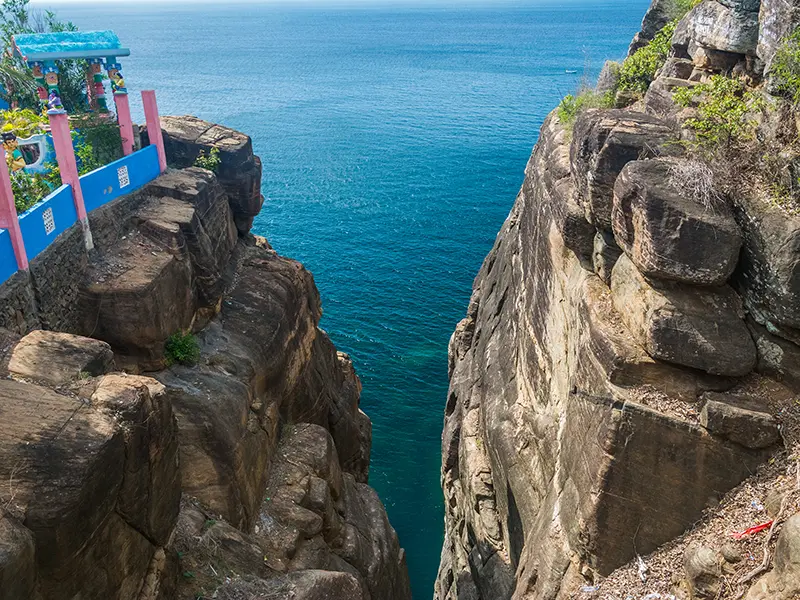
Welcome to Trincomalee, the shining capital of Sri Lanka’s East Coast. This ancient port city, known simply as “Trinco,” offers a world of experiences that feel remarkably different from the southern coastline. Here, the vibe is more relaxed, the history is uniquely multicultural, and the beaches are famously pristine, with soft white sand and stunningly clear, turquoise water.
The most important thing to know about Trincomalee is its unique season. While the south (like Galle and Mirissa) is hit by the monsoon, Trincomalee’s high season is from May to October. During these months, the ocean is perfectly calm, sunny, and ideal for the snorkeling and whale watching that make this region a world-class destination.
This is a city of incredible history, sacred temples perched on dramatic cliffs, and some of the best marine life in the entire Indian Ocean. Planning your visit here can be overwhelming, so we’ve created the ultimate guide to the 7 best things to do in Trincomalee to help you build the perfect East Coast adventure.
Table of Contents
Practical Tips & Quick Summary
- Best Time to Visit: The high season (and the only time for snorkeling/whales) is May to October.
- How Long to Stay: 3 to 4 days is perfect to see the highlights without rushing.
- How to Get Around: Tuk-tuks are plentiful for short trips. Renting a scooter gives you the most freedom to explore the different beaches.
- Core Vibe: A laid-back beach town mixed with deep cultural history.
The 7 Best Things to Do in Trincomalee
This list covers the essential experiences that make Trincomalee a highlight of any Sri Lankan itinerary. We’ll dive deep into each one, from the number one attraction to its most sacred cultural sites.
1. Snorkel with Sharks at Pigeon Island National Park
This is, without a doubt, the number one thing to do in Trincomalee. Pigeon Island National Park is one of only two marine national parks in Sri Lanka, and it offers the most accessible, high-quality snorkeling on the entire island.
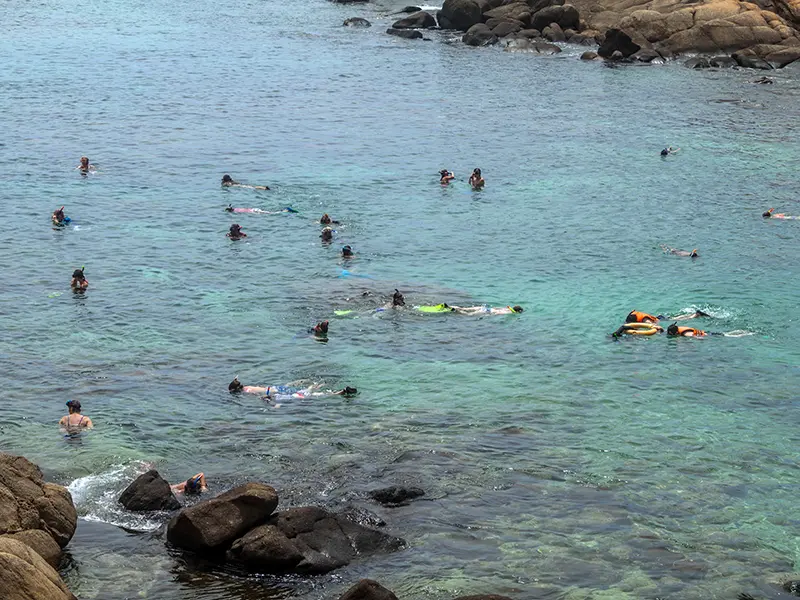
A 10-minute boat ride from Nilaveli Beach, this small, rocky island is encircled by a protected and surprisingly vibrant coral reef. The main attraction? You are almost guaranteed to snorkel with Blacktip Reef Sharks (who are harmless and feed on small fish) and numerous Green Sea Turtles.
The Full Experience: What to Expect
Your adventure begins on Nilaveli Beach, where boat operators will gather groups for the short ride. Once you arrive at the island, you’ll pay your park entrance fees to a Department of Wildlife Conservation (DWC) officer in a small hut.
The island has two main areas. The main beach opens up to a large, shallow, roped-off snorkeling area. This is where you’ll find the stunning coral gardens and dozens of colorful reef fish. It’s also where you will almost certainly encounter the Blacktip Reef Sharks, often swimming in water that is only waist-deep. On the other side of the island (a small 5-minute walk) is a second, smaller cove that is a known hotspot for sea turtles, which come here to feed on the seagrass.
How to Get There & Costs (2026 Guide)
- Boat: The boat ride is organized from the main stand on Nilaveli Beach. The price is per boat, so if you are a small group, you can wait for others to join to split the cost.
- Entrance Fees: This is the most expensive part of the trip, and prices can be confusing. As of late 2025, you can expect the total cost (including the shared boat, all park fees, taxes, and snorkeling gear rental) to be around $45 – $50 USD per person. It is not a cheap activity, but it is one of the most rewarding things to do in Trincomalee.
CeylonWiki Pro-Tips for Pigeon Island
- GO EARLY. We cannot stress this enough. Aim to be on one of the first boats of the day (around 8:00 AM). By 10:00 AM, the island is packed with tour groups, the sand gets kicked up, and visibility drops significantly.
- Bring Water: There is almost no shade on the island, and nothing is for sale. You must bring your own water, snacks, and a hat.
- Reef-Safe Sunscreen: The coral here is fragile. Please be a responsible traveler and use reef-safe sunscreen to protect this unique ecosystem.
2. Visit the Sacred Koneswaram Temple (Swami Rock)
Perched dramatically on the highest cliff of “Swami Rock,” the Koneswaram Temple is the most important cultural and religious landmark in Trincomalee. This vibrant Hindu temple (or kovil) is dedicated to Lord Shiva and is one of the five Pancha Ishwarams (five abodes of Shiva) on the island, making it a major pilgrimage site.
This is far more than just a temple; it’s a complete experience. The journey, the views, and the history are all part of what makes this a top thing to do in Trincomalee.
The Deep History & Legends
The site’s history is ancient, with references dating back over two millennia. The original, magnificent “Temple of a Thousand Pillars” was one of the wealthiest and most revered temples in Asia.
Tragically, this original structure was completely destroyed by the Portuguese colonial army in 1624. They pushed the entire temple, with its priceless statues and pillars, off the cliff and into the sea to build Fort Fredrick (see #5) with the stones. The temple you see today was rebuilt in the 1950s.
The cliff itself is known as “Lover’s Leap,” named after the tragic legend of a Dutch officer’s daughter who leaped from the rock after her unfaithful lover.
The Experience: What to Expect
Your visit begins at the entrance to Fort Fredrick. You’ll walk or take a tuk-tuk through the historic fort, passing a large, tame herd of spotted deer. A long row of vendors selling souvenirs, fruits, and pooja offerings lines the final path to the temple.
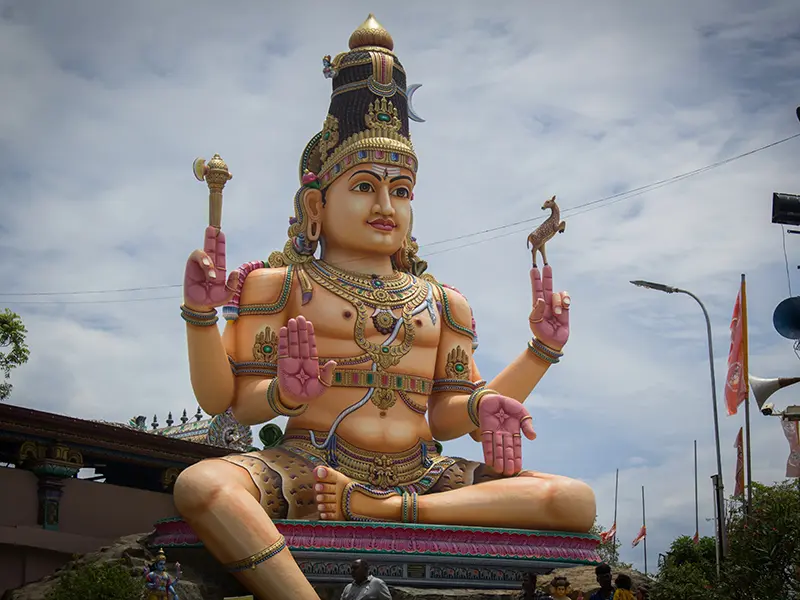
You must remove your shoes at the entrance and walk barefoot on the hot ground (another reason to go in the morning or late afternoon). The temple complex is a vibrant explosion of color. You’ll pass a massive statue of Lord Shiva before reaching the main shrine at the very tip of the cliff. The views from here, looking down at the turquoise water and the port below, are simply breathtaking.
Dress Code & Opening Hours (Crucial!)
- Dress Code: This is a very holy and active temple. You MUST cover your shoulders and knees. This applies to both men and women. Sarongs are available for rent, but it’s best to bring your own.
- Hours: The temple is generally open from 5:00 AM to 12:00 PM and again from 4:00 PM to 9:00 PM.
- Cost: Free to enter. You will need to pay a small fee to the “shoe-keeper.”
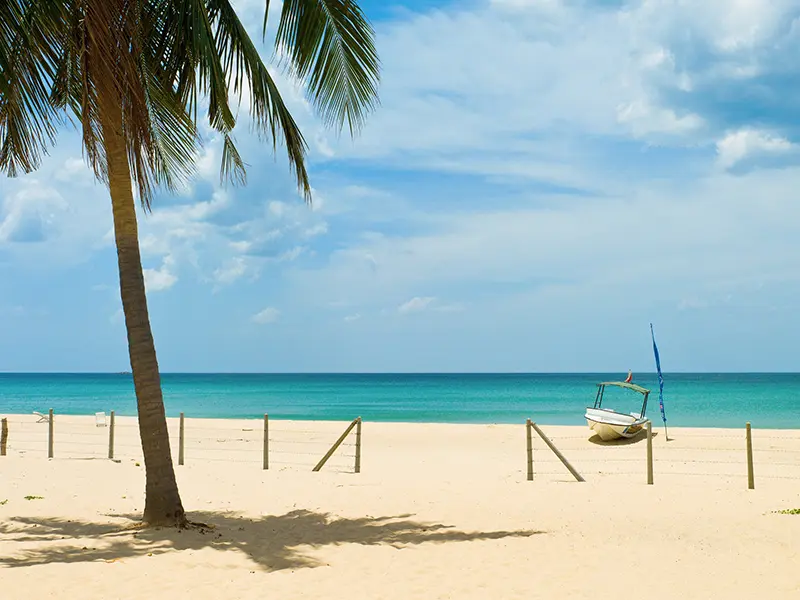
3. Relax on Nilaveli & Uppuveli Beaches
Trincomalee is, at its heart, a beach destination. The two main hubs for travelers are Uppuveli and Nilaveli. They are close to each other but offer very different vibes, so choosing the right one is key to planning your things to do in Trincomalee.
Uppuveli Beach: The Social Hub
Uppuveli is the beach closest to Trincomalee town (about 10 minutes north). This is the social, “backpacker” heart of the area. The beach is lovely, but the main draw is the high concentration of guesthouses, budget-friendly hotels, and lively beachfront bars and restaurants.
If you want to be social, meet other travelers, and have easy access to food and drinks, Uppuveli is your spot. The most famous bar here is Fernando’s Bar, a classic driftwood-style beach bar that is the default evening hangout for many travelers.
Nilaveli Beach: The Pristine Escape
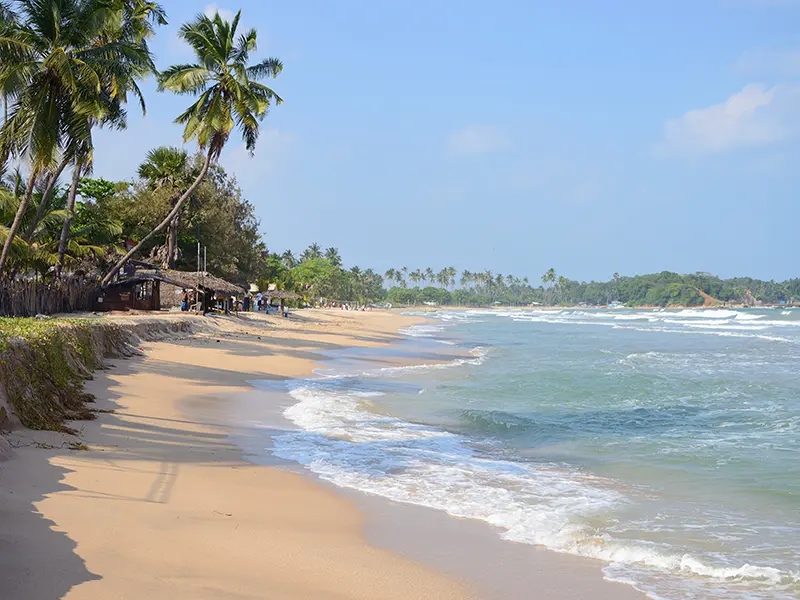
About 15-20 minutes further north from Uppuveli, you’ll find Nilaveli. This beach is in a different league. It is a long, stunningly wide expanse of soft, powdery white sand that stretches for several kilometers. The water is often crystal clear and bright turquoise.
This area is much quieter and more spread out, home to larger, more upscale resorts and a few quiet guesthouses. If your goal is pure relaxation, pristine swimming, and a “get away from it all” feeling, Nilaveli is the clear winner. This is also the launching point for all boat trips to Pigeon Island.
4. Go Whale Watching (East Coast Season)
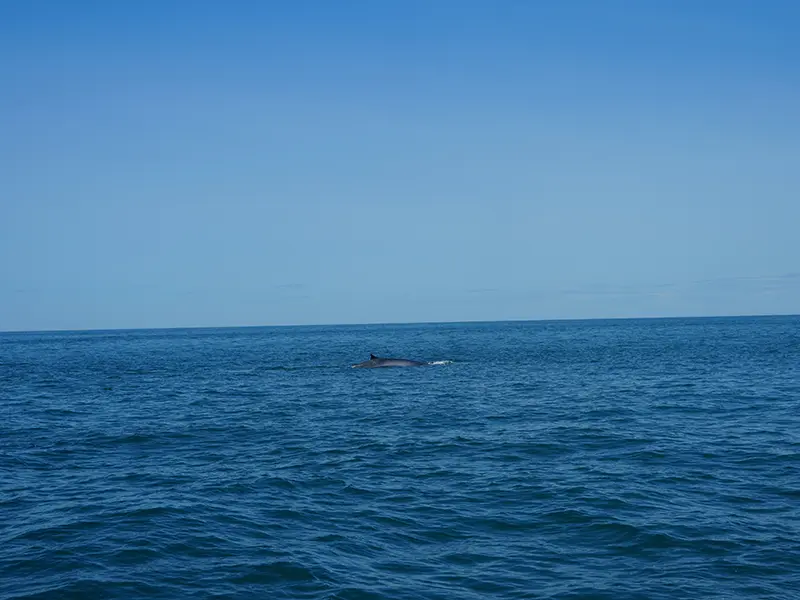
While Mirissa on the south coast is famous for whale watching, it has a clear season (November to April). Trincomalee offers the exact opposite season, making it one of the best places in the world for whale watching from May to October.
The deep-water canyons just off the coast of Trincomalee are on the migration path for the largest animal on the planet: the Blue Whale. Sperm whales are also frequently spotted, as are massive “super-pods” of dolphins, sometimes numbering in the hundreds.
This is one of the most truly awe-inspiring things to do in Trincomalee. Tours leave very early in the morning (around 6:00 AM) and last for 3-5 hours. As with any wildlife tour, sightings are not 100% guaranteed, but chances are very high during the peak season.
- Cost: Expect to pay around $50-$60 USD per person.
- Pro-Tip: Choose a responsible operator that respects the animals and does not crowd or chase them.
5. Explore the Historic Fort Fredrick
Entrance to Koneswaram Temple is through Fort Fredrick, but this historic fort is an essential thing to do in Trincomalee in its own right. Its history is a snapshot of Sri Lanka’s colonial past.
A Living History
The fort was first built by the Portuguese in 1623, famously using the stones from the Koneswaram Temple they had just destroyed. It was then captured and rebuilt by the Dutch in 1665, who named it Fort Fredrick. The British then took control in 1795.
Today, it functions as an active Sri Lankan military base, but it is completely open to the public.
The Experience: What to See
Walking through the fort’s grand entrance gate is like stepping back in time. The old colonial walls, cannons, and impressive architecture are fascinating. The most charming part of the fort, however, is the large, resident herd of spotted deer. They are completely tame and roam freely throughout the grounds, sleeping under the ancient trees.
You can also find the Gokanna Raja Maha Viharaya, a small Buddhist temple, tucked away inside the fort, showcasing the area’s multicultural harmony. This historic walk is one of the best free things to do in Trincomalee and the perfect activity for a hot afternoon, as the large trees provide wonderful shade.
6. Marvel at the Sri Pathrakali Amman Temple
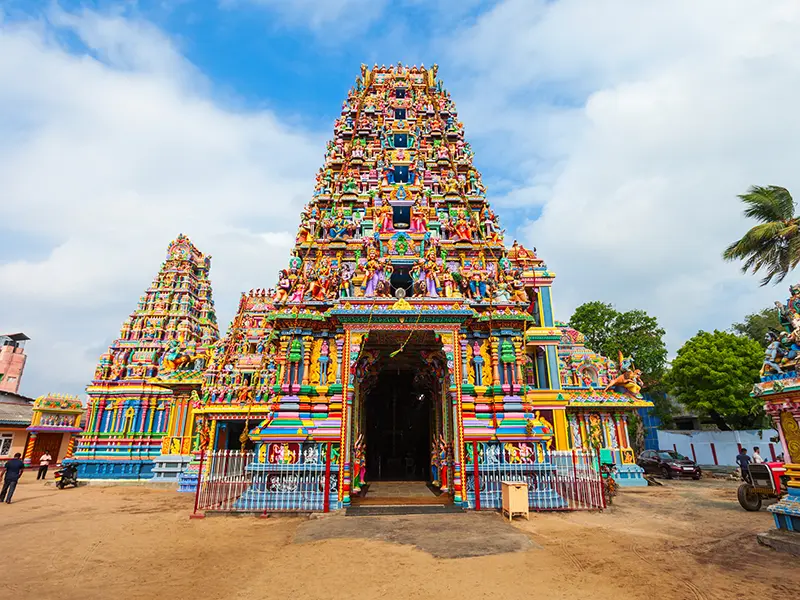
While Koneswaram gets most of the attention, this thing to do in Trincomalee is arguably even more visually spectacular. Located in the heart of Trincomalee town, the Sri Pathrakali Amman Temple (or Kali Kovil) is a vibrant, intricate Hindu temple dedicated to the fierce goddess Kali.
The entire structure is a mesmerizing explosion of color. The main tower, or Gopuram, is densely covered in hundreds of brightly painted statues of deities, gods, and figures from Hindu mythology. It’s an active, bustling temple where you can witness the daily pooja (offering ceremony) and experience the vibrant culture of the local Tamil community.
- Dress Code: The same strict rules as Koneswaram apply. Shoulders and knees must be covered, and shoes must be removed.
- Cost: Free.
7. Bathe at the Kanniya Hot Springs
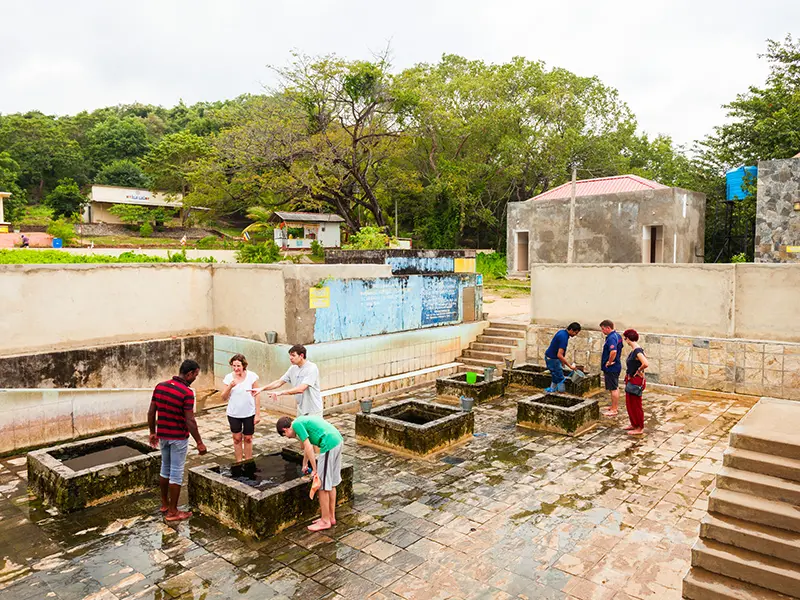
For a unique and very local cultural experience, take a 20-minute tuk-tuk ride inland to the Kanniya Hot Springs. This archaeological site is a popular destination for local pilgrims and is steeped in legend.
According to the Ramayana, these springs were created by King Ravana. The site consists of seven square wells, each containing naturally hot water. What makes it so fascinating is that the water in each well is a slightly different temperature.
This is not a spa. You do not get in the wells. The local ritual is to use a bucket to draw water from the wells and pour it over yourself. It’s a public and modest site, and the water is believed to have therapeutic properties. The area also contains Buddhist ruins, adding to its historical significance. This is one of the most unique things to do in Trincomalee if you want to get off the main tourist path.
- Rules: You bathe fully clothed (shorts and a t-shirt are fine). There are basic changing rooms available.
- Entrance Fee: A very small fee (around 50-100 LKR).
A Perfect 3-Day Trincomalee Itinerary
This sample itinerary is a perfect way to combine all the best things to do in Trincomalee without feeling rushed.
Day 1: Culture & Beach
- Morning: Arrive and check into your guesthouse in Uppuveli. Have lunch at a beachfront cafe like Fernando’s Bar.
- Afternoon: Take a tuk-tuk to Fort Fredrick. Spend an hour walking through the fort and seeing the deer.
- Late Afternoon: Continue to the Koneswaram Temple. Explore the complex and stay to watch the stunning sunset from the cliffs.
- Evening: Visit the Sri Pathrakali Amman Temple in town, then have dinner on Uppuveli beach.
Day 2: Marine Adventure
- Early Morning (8 AM): Head to Nilaveli Beach for your boat trip to Pigeon Island National Park. Spend 2-3 hours snorkeling with the sharks and turtles.
- Afternoon: Relax, swim, and have lunch on the beautiful, quiet Nilaveli Beach.
- Evening: Enjoy a fresh seafood dinner at one of the resorts on Nilaveli Beach.
Day 3: Whales & Hot Springs
- Early Morning (6 AM): Go on a Whale Watching tour to see blue whales and dolphins.
- Late Morning: After the tour, have breakfast and then take a tuk-tuk to the Kanniya Hot Springs for a unique cultural experience.
- Afternoon: Visit the Maritime & Naval History Museum (a quick, interesting stop) before catching your bus or train to your next destination.
Best Time to Visit Trincomalee: The Two Seasons
This is the most important part of planning your trip. The weather in Trincomalee is the opposite of the South Coast (Galle, Mirissa, Unawatuna).
High Season: May to October
This is the best and only time to visit. The weather is consistently dry, hot, and sunny. Most importantly, the Maha monsoon is not active, so the ocean is perfectly calm, clear, and safe for swimming.
- Key Activities: This is the only season for Pigeon Island snorkeling and East Coast Whale Watching. The boats for these activities will not run in the off-season.
Off-Season: November to April
This is the Maha Monsoon season. The East Coast experiences significant rainfall and wind. The ocean becomes rough, cloudy, and dangerous for swimming.
- Key Activities: Snorkeling and whale watching are not possible. Many guesthouses and restaurants in Uppuveli and Nilaveli close down completely. You should visit the South or West Coast during this time.
How to Get to Trincomalee
From Colombo:
- Bus: This is a common option. A/C buses leave from the Bastian Mawatha Bus Terminal. The journey is long (7-8 hours).
- Train: A scenic but very long (8+ hours) journey from Colombo Fort. There is often an overnight sleeper train option.
From the Cultural Triangle (Dambulla / Sigiriya):
- This is the easiest and most logical route. After finishing Dambulla or Sigiriya, you can easily catch a local bus from the Dambulla main bus station. The journey is direct, cheap, and only takes 2.5-3 hours.
From Kandy:
- Bus: You can take a direct bus from Kandy (GoodShed Bus Stand), which takes about 4-5 hours.
- Check our Getting Around Sri Lanka guide for more details.
How to Get Around Trincomalee
- Tuk-Tuk: This is the most common way to get around. The town and beaches are spread out, so you’ll be using them. Always agree on a price before you get in.
- Scooter Rental: This is the best option for freedom. Renting a scooter for a day or two is cheap and allows you to easily travel between your hotel in Uppuveli, the beaches of Nilaveli, and the temples in town on your own schedule.
Conclusion
Trincomalee is the crown jewel of the East Coast, a destination that truly feels like an escape. It offers a perfect blend of high-octane adventure, deep cultural history, and pure, unrivaled beach relaxation. It’s a region with its own unique identity, its own distinct season, and some of the best marine life encounters in the world.
Whether you’re snorkeling with sharks, watching the sunset from a sacred cliff, or simply relaxing on a white-sand beach, the many things to do in Trincomalee are sure to be an unforgettable highlight of your Sri Lankan journey.
What things to do in Trincomalee are you most excited about? Let us know in the comments!
Helpful External Resources
- Sri Lanka Tourism Development Authority: The official tourism board, for reliable travel advisories and regional information.
- Department of Wildlife Conservation (DWC): The official source for information and park fees for Pigeon Island National Park.
- Sri Lanka Railways: The official government website to check train schedules from Colombo or Kandy.